Ripple Effect: How Natural Child's Raw Honesty Lit a Fire Under a New Generation of Artists
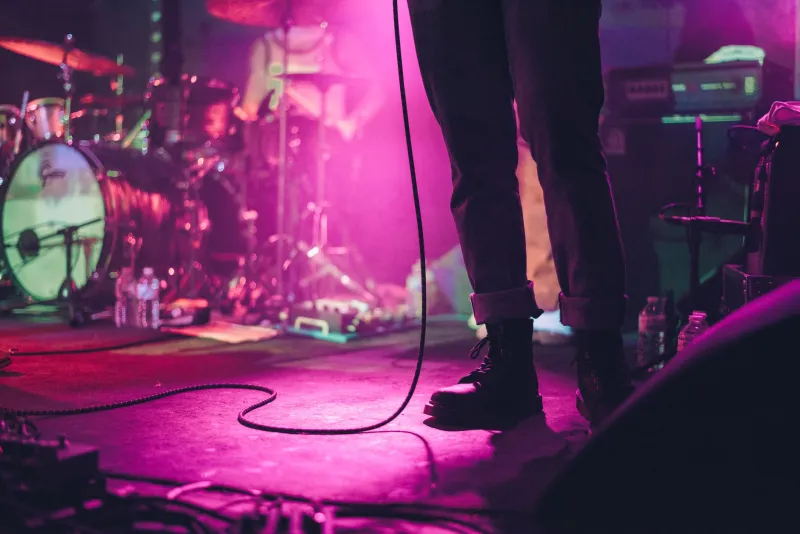
There's a moment that happens at a Natural Child show — usually somewhere between the second song and the third beer — when something clicks. The room stops performing the act of watching a band and just starts feeling it. The guitars are a little ragged. The vocals don't sit perfectly in the pocket. And none of that matters, because the whole thing breathes like something alive. For a lot of people who've witnessed that moment, it turns out to be a kind of turning point — not just as fans, but as musicians.
Over the past several years, a loose but growing movement has been taking shape across the American music underground. It doesn't have a name or a manifesto. It's not a genre. What it is, at its core, is a refusal — a collective decision by a new crop of artists to stop chasing studio perfection and start chasing something real. And time and again, when you ask these artists where the impulse came from, Natural Child comes up.
The Problem with Perfect
To understand why Natural Child's approach resonates so deeply, you have to reckon with what most mainstream music has become. The tools available to producers today are extraordinary — pitch correction, beat quantization, sample libraries that can conjure any sound imaginable. The result, in a lot of cases, is music that is technically flawless and emotionally inert. It sounds like it was assembled rather than played. Because, often, it was.
Streaming platforms have accelerated this tendency. When listener retention data influences creative decisions, when the first eight seconds of a track determine whether it survives the scroll, artists face enormous pressure to sand down every rough edge. The music that gets rewarded is frequently the music that offends no one and surprises no one.
Natural Child has spent their career doing the opposite. Their recordings carry the ambient noise of real rooms. Their songs sound like they were written by people who'd actually lived through something. Their performances don't hide the human variability that studio production normally erases. In a landscape of polished surfaces, they've been offering texture — and it turns out a lot of people were hungry for exactly that.
Artists Who Got the Message
Talk to musicians coming up in the Americana, country, and roots-rock worlds right now, and you'll hear a consistent theme. There's a growing sense that the race toward studio perfection has been a race in the wrong direction, and that bands like Natural Child have been quietly proving the point for years.
Emergent artists from cities like Austin, Muscle Shoals, and Louisville — places with deep roots in American music tradition — describe a kind of permission that Natural Child's catalog gave them. Permission to leave the warts in. Permission to trust that a song with a story is worth more than a song with a sheen. Permission to believe that an audience will follow you into imperfection if you're honest about why you're there.
The specific qualities they cite are telling. It's not just that Natural Child records on tape or avoids digital processing, though those choices matter. It's the attitude embedded in those choices — the implicit argument that the music itself is the point, not the image the music projects. That distinction turns out to be surprisingly hard to manufacture, and surprisingly easy to recognize when it's genuine.
What Listeners Are Actually Responding To
The cultural shift isn't only happening among musicians. Listeners are part of it too, and in some ways they've been ahead of the curve.
For all the hand-wringing about attention spans and streaming culture, there's substantial evidence that audiences are capable of deep engagement when they're given something worth engaging with. Natural Child's fanbase — built through years of relentless touring, word of mouth, and the kind of loyalty that only comes from real connection — is a case study in that phenomenon. These aren't passive consumers. They're people who follow the band from city to city, who wear the T-shirts because they mean something, who evangelize to their friends with the fervor of people sharing a genuine discovery.
That kind of relationship between artist and audience doesn't happen by accident, and it doesn't happen because a song performed well in the first week of release. It happens because something in the music made contact with something real in the listener. The rawness isn't incidental to that connection — it's the mechanism of it. When a recording sounds like it was made by actual human beings having an actual experience, it creates space for the listener to have an actual experience too.
The Streaming Age Paradox
Here's the strange thing about this moment in music: the same digital infrastructure that pressures artists toward homogenized, algorithm-friendly production has also made it easier than ever for genuinely independent artists to find their audience without corporate gatekeepers. Natural Child has benefited from this paradox, and so have the artists they've inspired.
You don't need a major label deal to put music in front of people anymore. You don't need radio play. What you need is something worth listening to — something that makes a person stop and send it to a friend. In that environment, authenticity becomes a competitive advantage rather than a liability. A song that sounds like nothing else on the playlist stands out precisely because it sounds like nothing else on the playlist.
The artists absorbing Natural Child's influence seem to understand this intuitively. They're not making raw, organic music as an act of nostalgia or contrarianism. They're making it because it's the music they actually want to make, and because they've seen evidence — in Natural Child's trajectory — that there's a real audience waiting for it.
Why It Matters Beyond Music
There's a bigger cultural story embedded in all of this. At a moment when so much of American life feels mediated, optimized, and performance-managed, the appeal of something genuinely unfiltered goes beyond aesthetics. Natural Child's music, and the movement it's helped inspire, is partly a response to a broader exhaustion with artificiality.
People are tired of content. They want art. They're tired of brands. They want bands. They're tired of carefully constructed personas. They want to hear from actual human beings who've actually felt something and found a way to say it out loud.
Natural Child has been saying it out loud for years, in roadhouses and on festival stages, on records that sound like they were made in a room rather than assembled in a server farm. The ripple effect of that commitment — the artists it's emboldened, the listeners it's reconnected to something real — is still spreading.
That's what genuine artistry does. It doesn't just make music. It makes room for more of it.
