Why Imperfect Recordings Hit Harder: The Science Behind Natural Child's Sound
Put on a Natural Child record and then put on almost anything that charted in the last five years. The difference isn't subtle. One sounds like it was made by people in a room, playing together, making decisions in real time. The other sounds like it was assembled — piece by piece, sample by sample, processed until every rough edge was smoothed away. Both are music. But they don't feel the same. And increasingly, researchers think they know why.
The short version: your brain isn't neutral about production choices. The way a recording is made — the room sound, the timing fluctuations, the harmonic imperfections — activates different neural responses than a hyper-produced, digitally corrected track. Natural Child, whether they think about it in these terms or not, has been making records that work with human neurology rather than against it.
What Your Brain Is Actually Listening For
Human hearing evolved to process live sound — acoustic events happening in physical space, with all the natural variation that implies. A voice doesn't sustain at exactly the same volume from note to note. A guitar string doesn't vibrate at a perfectly consistent pitch. A drummer's timing has what researchers call "microtiming fluctuations" — tiny, near-imperceptible variations in beat placement that are actually a feature, not a bug.
When we hear these natural variations, our auditory cortex recognizes them as markers of a real, human performance. That recognition matters more than it might seem. Studies in music psychology suggest that perceived humanness in a recording correlates directly with emotional engagement. We lean in. We feel more.
Hyper-processed modern recordings, by contrast, strip out much of this variation. Auto-tune removes pitch drift. Quantization locks rhythms to a perfect grid. Compression flattens the dynamic range that would otherwise give a performance its sense of breathing. The result can be technically impressive and still leave listeners feeling oddly unmoved — what some researchers describe as the "uncanny valley" of recorded music.
Analog Warmth Is Not Just a Vibe
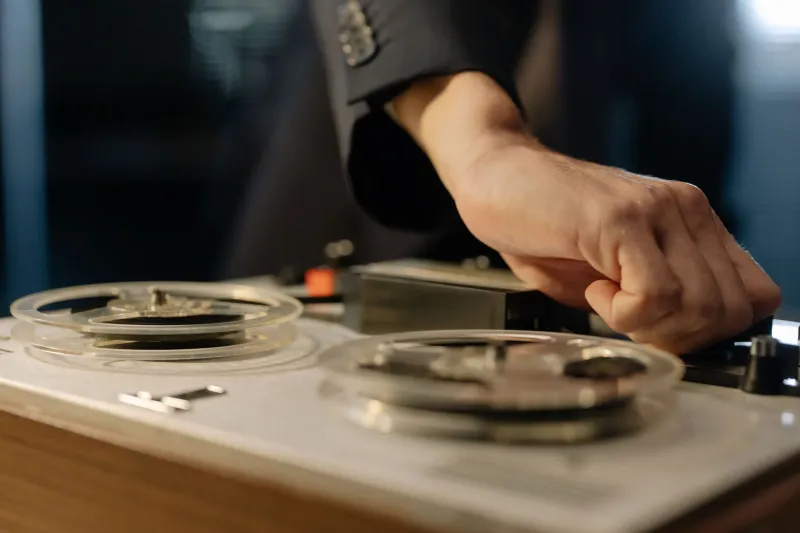
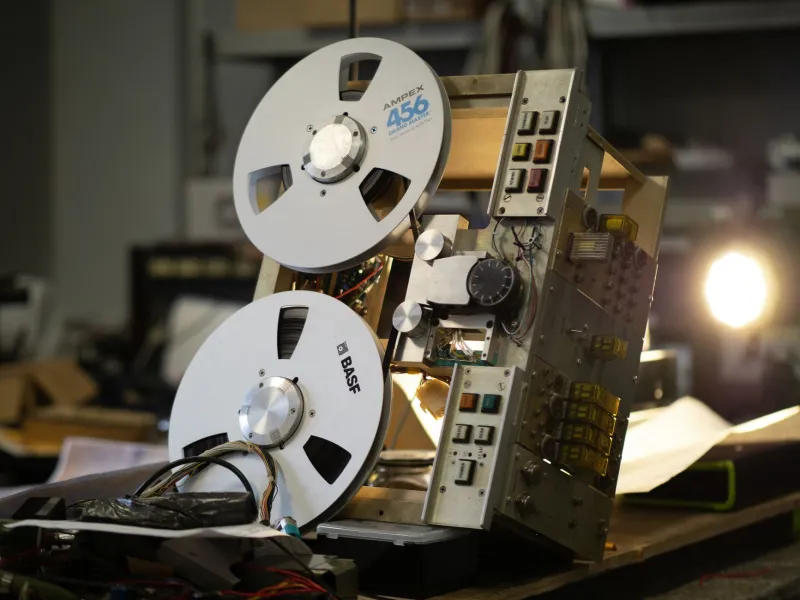
Natural Child records on analog tape. This isn't a stylistic affectation — or rather, it's not only that. Analog recording has measurable acoustic properties that digital recording, especially heavily processed digital recording, doesn't replicate.
Tape saturation introduces subtle harmonic distortion — additional overtones that make sounds feel richer and fuller. Tape compression responds organically to loud transients rather than clamping down on them with the precision of a digital limiter. The cumulative effect is a recording that contains more acoustic information per second than a heavily processed digital track.
Audiologists and recording engineers have debated the perceptual significance of these differences for decades. But a growing body of listener research suggests that people consistently describe analog-recorded music as "warmer," "more present," and — critically — "more emotional," even when they can't identify the specific technical reason.
"There's something about the way sound sits on tape that makes it feel like it's in the room with you," says one longtime Natural Child fan who works as a sound engineer in Chicago. "I can tell my clients all day that the digital chain is technically superior. But when I want to feel something, I put on a record."
The Live-in-the-Room Factor
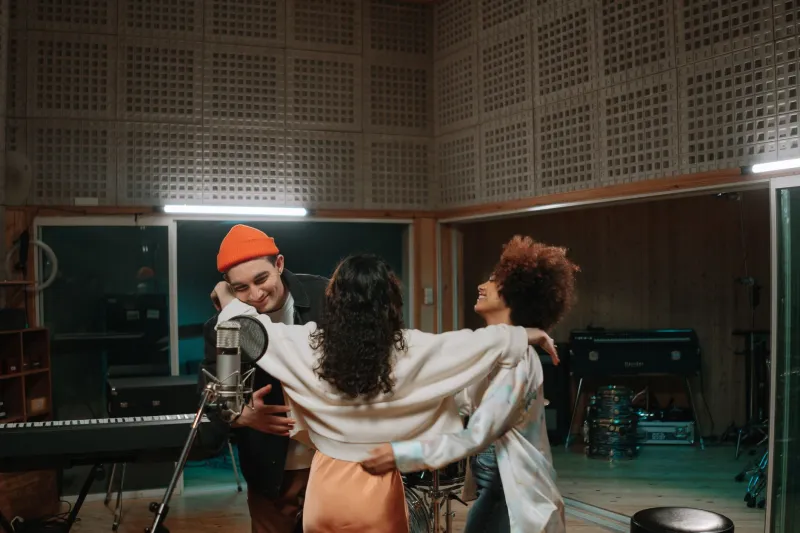
Natural Child typically records live — the band in the same space, playing together, capturing a take rather than assembling one. This matters neurologically in ways that go beyond the technical.
When musicians play together in real time, they respond to each other. A rhythm changes slightly because the drummer felt the guitarist lean into a chord. A vocal phrasing shifts because the room felt like it needed more space. These micro-adjustments create what music psychologists call "entrainment" — the tendency of listeners' physiological rhythms to sync up with what they're hearing.
Entrainment is real and measurable. Heart rate, breathing, and brainwave activity all show synchronization effects when people listen to music with natural rhythmic variation. The effect is stronger with live performance and with recordings that preserve the qualities of live performance. It's weaker — sometimes significantly so — with music that has been quantized and processed to remove that natural variation.
In plain terms: Natural Child's recordings are more likely to get inside your body and move it than a typical streaming-era production. That's not poetry. It's physiology.
What Listeners Are Actually Describing
Talk to Natural Child fans about why the music hits the way it does, and they reach for words that map almost exactly onto what the research describes.
"It feels physical," says one fan in Memphis. "Like it's not just in my ears — it's in my chest."
"There's something alive about it," says another, a regular at their Austin shows. "Like the band is actually in the room."
"I've listened to that record probably three hundred times and it still doesn't feel worn out," says a listener in Asheville. "Most stuff I get tired of after a week."
That last observation connects to another area of music psychology research: the relationship between acoustic complexity and long-term engagement. Recordings with more natural variation — more subtle information for the brain to process — tend to maintain listener interest longer than highly processed recordings, which the brain quickly learns to "predict" and then tunes out.
Natural Child's sound, with its tape hiss and room reflections and human timing, keeps giving the brain something to chew on. That's part of why the catalog holds up across repeated listening in a way that a lot of contemporary production doesn't.
The Takeaway
None of this means Natural Child sat down with neuroscience textbooks before making a record. They made the music they wanted to make, the way it felt right to make it. But the science is a useful lens for understanding why that music connects so viscerally with the people who find it.
In an era of infinite, instantly accessible, algorithmically optimized audio content, the recordings that cut through might be the ones that sound least like they were designed to. The ones that sound like people — imperfect, present, alive.
Your ears already knew that. Now there's research to back it up.