Handmade and Unbothered: How Natural Child Keeps It Real in the Playlist Era

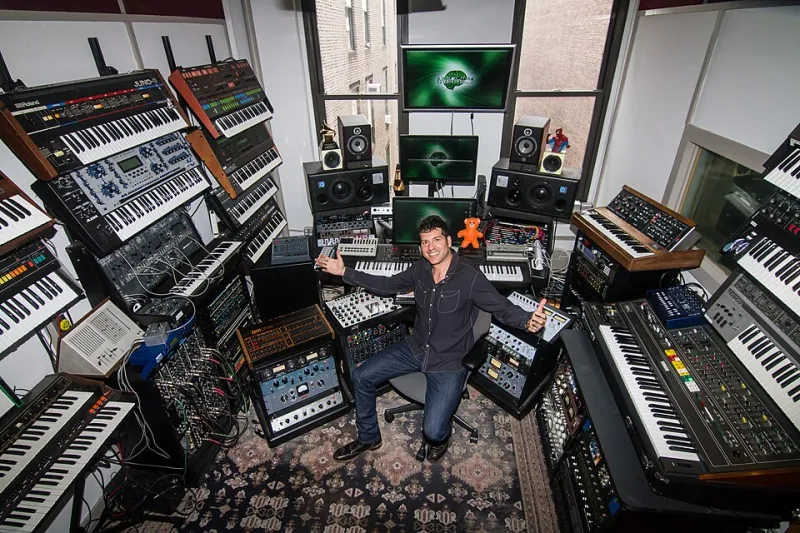
Photo: indie band recording in DIY home studio analog equipment vintage, via i.pinimg.com
There's a version of Natural Child that never happened. The one where a mid-sized label swooped in, cleaned up the production, hired a social media consultant, and started pitching tracks to Spotify's editorial team. That band would probably have more followers. They'd almost certainly have fewer fans.
The Natural Child that actually exists — the one that's been grinding through clubs, pressing records on their own terms, and recording with more attention to feel than fidelity — has chosen a different road. And in 2025, that choice looks less like stubbornness and more like wisdom.
Starting From Scratch, and Staying There
The band's origins are well-documented in the kind of lore that only comes from genuinely doing things the hard way. Early recordings that sound like they were made in a room that hadn't been cleaned since the Carter administration. Releases that circulated through word of mouth, record shop bulletin boards, and the kind of regional music press that still cares about what's happening in a city's basement scene.
What's remarkable isn't just that Natural Child started that way — plenty of bands start scrappy and drift toward polish once money enters the picture. What's remarkable is how deliberately they've protected that original instinct. The rawness isn't nostalgia. It's a production philosophy. It's a statement about what music is supposed to do to a room.
That commitment shows up in how they've approached every release. No committee decisions about sonic direction. No A&R notes suggesting a chorus needs to land differently for radio. The band makes what the band makes, and the audience finds it because it sounds like something real in a market full of things that don't.
The Streaming Trap, and How to Sidestep It
Here's the thing about streaming culture that nobody in the industry wants to say out loud: it rewards a very specific kind of music. Songs engineered to not lose listeners in the first thirty seconds. Hooks calibrated to survive shuffle mode. Production choices made with playlist curators in mind rather than the people standing at the bar waiting for something to hit.
Natural Child's catalog is essentially the opposite of all that. Their songs breathe. They take their time. They reward the listener who stays with them, rather than the one who's half-listening while doing something else. That's not an accident, and it's not ignorance of how the business works. It's a considered rejection of a system that treats music like content.
The band has continued to prioritize vinyl and physical releases in ways that feel increasingly countercultural. There's an understanding baked into that choice — that the people who are going to love Natural Child are the people who still want to hold something in their hands, read the liner notes, and drop the needle themselves. That's not a small audience. It's just a specific one. And building for that audience, rather than chasing the broadest possible reach, is exactly how you end up with something sustainable.
Hands-On, All the Way Down
One of the things that separates Natural Child from a lot of their peers is how much of the operation they keep in-house. Production, booking decisions, the aesthetic choices around how they present themselves — these aren't things the band has handed off to professionals with spreadsheets. The DIY ethos that defined the early years isn't a phase they grew out of. It's a management style.
That means slower growth, probably. It definitely means more work. But it also means that every decision about Natural Child reflects what Natural Child actually values, rather than what's been focus-grouped into something palatable. When you hear a new record, you're hearing what the band wanted to make. That's rarer than it sounds.
The hands-on approach also extends to their relationship with the people who come to their shows. There's no wall of handlers between the band and the audience. The merch table is a real place where real conversations happen. The connection is direct because the infrastructure is minimal, and that directness is part of what keeps fans coming back.
What the Journey Says About American Music Right Now
Natural Child's path raises a question that's worth sitting with: in an industry built on scalability, what does it mean to deliberately stay small enough to stay honest?
The answer, at least the one their career seems to be arguing for, is that it means you get to make music that matters to the people who find it. Not music that's been optimized for passive consumption, but music that demands something from the listener — attention, presence, maybe a little patience — and gives something real back in return.
American roots music has always had this tension running through it. The commercial pull versus the authentic core. The question of who you're making it for and what you're willing to trade to reach them. Natural Child has staked out a position in that argument, and they've held it through a period when the pressure to move in the other direction has never been stronger.
From the basement tapes to the sold-out club shows, the throughline is the same: make it yourself, make it real, and trust that the people who need to find it will. In the streaming era, that's not a quaint philosophy. It's a genuinely radical act.