Built on Brotherhood: The Creative Bond That Makes Natural Child More Than Just a Band
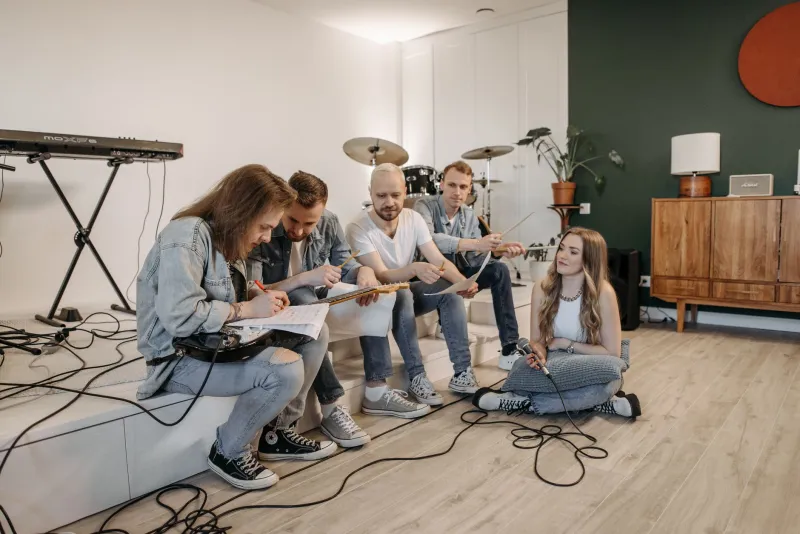
There's a reason some bands feel like a product and others feel like a conversation you stumbled into at a backyard cookout. Natural Child falls firmly into the second category, and it's not by accident. The Nashville-rooted outfit has always operated less like a conventional rock group and more like a crew of lifelong friends who happen to make really good music together — because that's essentially what they are.
In an era where manufactured band narratives get packaged and sold alongside the merch, Natural Child's dynamic stands out precisely because it was never designed to stand out. It just is what it is: real people, real history, real trust.
When the Friendship Came First
The story of Natural Child doesn't start in a rehearsal space or a record label's conference room. It starts with people who genuinely like each other. Wes Traylor, Seth Murray, and Zack Martin came up together through the kind of slow-burn, hang-around-long-enough camaraderie that can't be faked or fast-tracked. By the time they started writing songs under the Natural Child name, they already knew each other's musical instincts, creative quirks, and — maybe more importantly — each other's limits.
That foundation matters more than most people realize. When you've eaten bad gas station food together on a road trip that went sideways, when you've argued over a guitar riff at two in the morning and still showed up the next day ready to work, you build a kind of shorthand that doesn't exist in bands assembled for strategic reasons. You stop wasting energy on ego management and start spending it on the music.
No Ego, No Gatekeeper
One of the things that consistently comes up when people talk about Natural Child's creative process is the absence of a single dominant voice calling all the shots. That's rarer than it sounds. Plenty of bands operate with one songwriter who controls the vision while everyone else fills in the blanks. Natural Child has never worked that way.
Ideas get thrown into the room and the best ones survive — not because someone with more clout pushed them through, but because the group collectively recognizes when something clicks. That democratic instinct shapes everything from the chord progressions to the way a vocal melody sits in the mix. When no one's protecting their territory, the song gets to be what it wants to be.
This approach also means arrangements evolve organically. A riff that starts as a throwaway idea in soundcheck might end up being the hook that anchors a whole track. The looseness isn't sloppiness — it's the byproduct of people who trust each other enough to let things breathe.
What It Sounds Like When People Actually Listen to Each Other
You can hear the collaboration in the music itself. Natural Child's records have a lived-in quality that goes beyond production choices or gear. There's a responsiveness between the instruments — a bass line that leans into a guitar figure just slightly, a drum fill that seems to anticipate where the melody is heading. That kind of interplay only happens when musicians are genuinely listening to each other rather than waiting for their turn.
It's the difference between a band playing songs and a band playing with each other. The latter is what makes rock and roll feel alive, and it's what draws listeners back to Natural Child's catalog again and again. Even on recordings, the conversation between the players is audible.
Live, that dynamic gets amplified. Anyone who's caught Natural Child on tour knows that their shows carry an unpredictability that's rooted in this same mutual attentiveness. They're not running through a set list on autopilot. They're reading each other in real time, and the audience gets pulled into that energy whether they planned on it or not.
Why Fans Are Tired of the Fake Version
American music fans — especially the ones who've been around long enough to see a few trends cycle through — have developed a pretty sharp nose for manufactured band dynamics. The carefully staged banter, the synchronized social media posts, the behind-the-scenes content that feels more like a PR campaign than an actual look inside a creative partnership. People can smell the difference.
What Natural Child offers is the antidote to all of that, and fans respond to it viscerally. It's not that the band is trying to be relatable or authentic in some calculated way. It's that the genuine article has a texture to it that no amount of brand strategy can replicate. When Wes cracks up at something Seth does mid-song, that's not a moment that got workshopped in a marketing meeting. It's just two guys who've been friends for years, doing what they do.
That realness creates a different kind of fan loyalty. People aren't just following the music — they're following the relationship. They feel like they're in on something, like they've found a band that operates by the same values they hold in their own friendships: show up, be honest, don't take yourself too seriously, and do the work.
A Blueprint Worth Studying
For younger bands trying to figure out how to build something that lasts, Natural Child's approach offers a quiet but powerful lesson. It's not about finding the right image or targeting the right demographic. It's about doing the slow, unglamorous work of actually knowing your bandmates — their strengths, their blind spots, the way they hear music differently than you do.
The bands that endure tend to be the ones where the relationships are real. The ones where the members would hang out even if there were no gigs to play, no records to promote. Natural Child fits that description, and it shows in everything they put out.
That's the real blueprint here. Not a formula, not a strategy — just a bunch of guys who like each other, making music together, and letting that friendship do the heavy lifting.
And honestly? In the current landscape, that's about as radical as it gets.