Close Quarters, Loyal Crowds: Why Natural Child Keeps Betting on Small Rooms Over Big Numbers
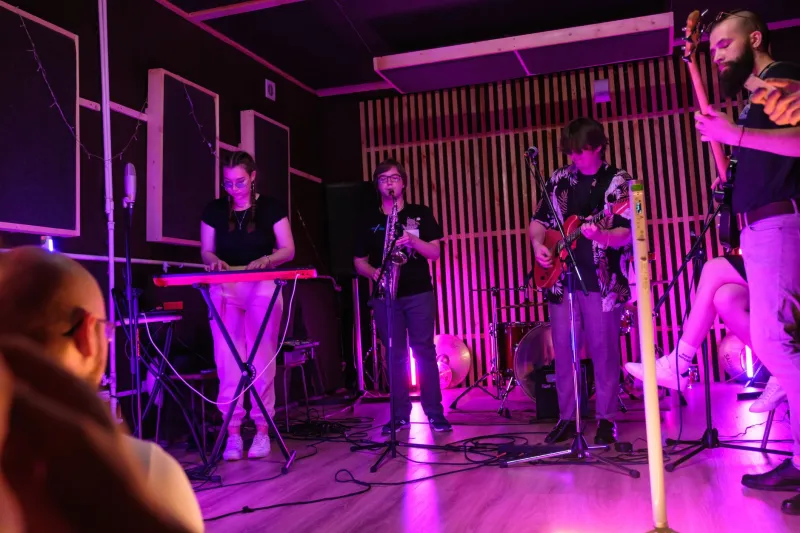
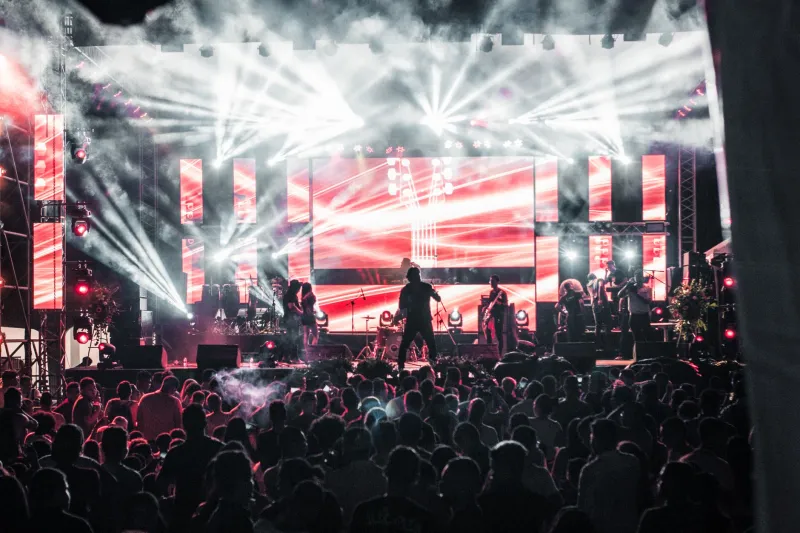
There's a moment that happens at almost every Natural Child show. It's usually somewhere around the third song, when the room — a sticky-floored bar in Knoxville, a converted warehouse in Kansas City, a roadhouse outside Baton Rouge — starts to feel like it's shrinking in the best possible way. The ceiling gets lower. The crowd gets louder. And whatever distance existed between the band and the people standing three feet in front of the stage just dissolves.
That moment isn't an accident. It's the whole point.
At a time when the music industry's dominant logic pushes artists toward streaming dashboards, algorithmic playlists, and the relentless pursuit of festival billing, Natural Child has been doing something that looks almost stubborn from the outside: they keep playing small rooms. They keep routing through cities that don't show up on the major-market touring maps. And they keep doing it on their own terms, without a corporate machine propping them up or a viral moment carrying them forward.
The results, if you actually pay attention, are hard to argue with.
The Math That Doesn't Show Up on a Dashboard
Here's the thing about streaming numbers — they're wide but they're shallow. A song can rack up a hundred thousand plays and still not fill a 300-seat venue on a Tuesday night in Memphis. The audience that found you through an algorithm is a different creature than the audience that drove two hours because their friend wouldn't shut up about how good the last show was.
Natural Child has built their following almost entirely out of the second kind of fan. These are people who own the records, who know the deep cuts, who show up early and stay late and come back the next time the band rolls through town. Per capita, that kind of loyalty translates into ticket sales, merch purchases, and word-of-mouth that no playlist placement can replicate.
The economics of a 250-cap room filled with true believers consistently outperform a 1,500-cap theater half-full of curious strangers. That's not a knock on growth — it's just an honest accounting of where the sustainable money actually lives in independent music right now.
Regional Roots, National Reach
Natural Child's touring map reads like a love letter to the parts of America that get skipped. The band has always understood that the country's musical heartbeat doesn't pulse exclusively from New York and Los Angeles. It lives in the college towns, the regional capitals, the rust-belt cities with good bars and underserved audiences hungry for something real.
By committing to those markets year after year — coming back to the same cities, building relationships with the same independent promoters, playing the same rooms as they grow alongside them — the band has created something genuinely rare: a regional touring infrastructure that actually holds weight. When Natural Child announces a run through the Southeast or a swing through the Midwest, those shows sell because the people in those cities feel ownership over the band. They were there early. They watched it grow.
That regional loyalty, multiplied across a dozen or more markets, adds up to something that looks a lot like national reach — just built from the ground up instead of handed down from a label.
Why the Room Size Is the Message
There's an argument to be made that the choice to stay in small venues is itself a form of communication. When a band plays a 200-person room, they're telling the audience something: you matter more than optics do. There's no barricade. There's no VIP section cutting off the first fifteen rows. There's just the band and the people who showed up, sharing the same air and the same volume.
For Natural Child, that intimacy is inseparable from the music itself. These are songs about real life — about work and drinking and heartbreak and the particular loneliness of American highways at two in the morning. They land differently when you can see the sweat on the guitarist's face and feel the bass in your chest. Scale that up to an amphitheater and something gets lost in the translation.
The band has never pretended otherwise. The small room isn't a stepping stone they're tolerating on the way to something bigger. For them, it's the destination.
A Blueprint Other Artists Are Starting to Notice
What's interesting is that Natural Child's approach — which looked eccentric five or six years ago — is starting to look prescient. As streaming payouts remain laughably thin and festival lineups grow increasingly homogenized, more independent artists are asking the same questions the band has been quietly answering through action: What if we built slower? What if we went deeper instead of wider? What if the 300-person room, sold out, is actually the better gig?
A growing number of musicians in the Americana, country-rock, and roots spaces are restructuring their touring around exactly this logic. They're turning down opening slots on major tours in favor of headlining their own regional runs. They're investing in the cities that have shown up for them instead of chasing the ones that haven't. And more than a few of them will tell you, if you ask, that watching how Natural Child operates gave them permission to think that way.
That's a different kind of influence than chart position. It's the kind that actually changes how people build careers.
The Long Game, Played Honestly
None of this is to say that Natural Child has figured out some secret formula or that their path is the only valid one. Touring is hard. Small rooms don't always pay well. The road takes something out of you no matter how much you love it. There are nights when the draw is disappointing and the drive home is long and the whole thing feels like a grind.
But there's something to be said for a band that has stayed recognizably themselves across a decade-plus of releases and tours, that has never had to perform a version of success they don't actually feel, and that can walk into a room in any mid-size American city and find people who genuinely care that they showed up.
In the current music landscape, that's not a small thing. That's actually everything.
The algorithm will always favor whoever fed it most recently. The crowd that drove across town on a Wednesday night because they've seen you four times before — that's yours. Natural Child figured that out early, and they've been cashing in on it ever since, one small room at a time.