Rough Edges and Real Feelings: Why Natural Child Writes Songs That Hit Different
There's a moment in a lot of recording sessions where someone in the room says, "Let's do one more take — that one was close." Close to what, exactly? Close to some imaginary version of the song that exists only in a producer's head, polished smooth until every human fingerprint has been buffed away? Natural Child has never really been interested in chasing that version. They're after something messier, something that breathes, something that sounds like it happened to real people in a real room.
That's not an accident. It's a philosophy.
The Moment Before the Edit
Most bands treat the recording process like a construction project — lay the foundation, build the walls, sand everything down, paint it clean. Natural Child tends to treat it more like a photograph. You point the camera at something true, you press the button, and you don't spend six months retouching the shadows out of the subject's face.
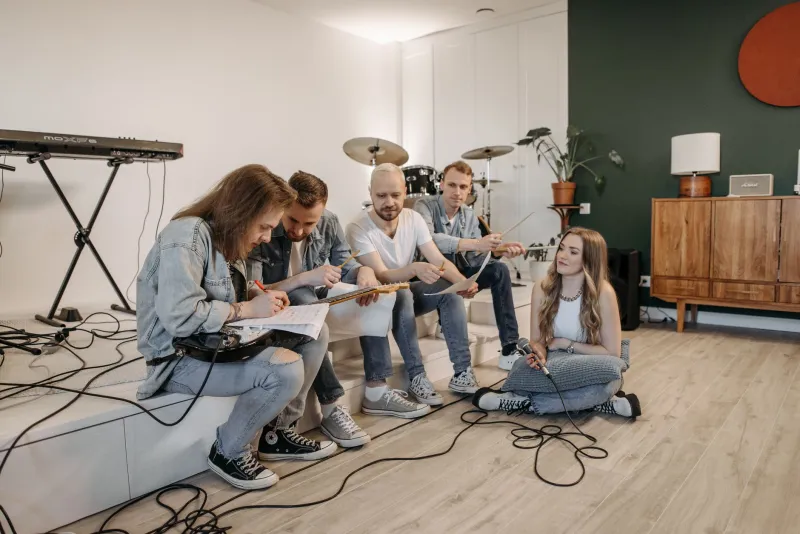
When you listen to their catalog, you can actually hear the room. You can hear the slight hesitation before a vocal line drops in, the way a guitar string buzzes just a little against the fret, the barely-there exhale between verses. None of that stuff ends up on a record by accident. It ends up there because someone made a deliberate choice to leave it in — because those imperfections are exactly what makes the song feel inhabited.
That's the whole bet Natural Child is making every time they sit down to write. Three minutes of something honest will outlast a thousand hours of something technically flawless.
Writing Toward the Feeling, Not Away From It
The band's songwriting approach tends to start with a feeling rather than a concept. A lot of their best material sounds like it was written in the middle of whatever it's describing — road-worn, a little restless, occasionally bruised. That's not a pose. That's what happens when you're actually living the kind of life you're writing about.
Take the way Natural Child handles a lyric. There's rarely a sense that the words have been committee-approved, run through a focus group, or stress-tested against streaming analytics. The lines land because they sound like something a person actually said, or thought, or felt at two in the morning when the honest stuff tends to surface. Country music used to do this all the time before it got stadium-sized. Rock and roll used to do it too. Natural Child is part of a smaller, scrappier tradition that never stopped.
The chord structures back that up. Nothing is overworked. There's a looseness to the arrangements that gives each song room to move — space for the emotion to sit without being crowded out by production decisions made to impress other producers.
What Pre-Production Actually Means for a Band Like This
For a lot of acts, pre-production is where songs get workshopped into submission. Tempos get locked, every instrument gets a lane, and by the time the band actually hits record, the performance has been rehearsed until the life is mostly gone. Natural Child's version of pre-production looks a little different.
The goal isn't to eliminate the unknown — it's to get comfortable enough with the material that the unexpected stuff can actually happen. When you know a song well enough, you stop thinking about the mechanics and start actually playing it. That's when the good accidents occur. That's when someone plays something they didn't plan, and it turns out to be the best moment on the track.
Leaving room for that is a creative choice. It requires a certain amount of trust — in each other, in the material, and in the listener's ability to connect with something that isn't perfectly manicured.
The Production Philosophy in Plain Terms
If you had to boil down the Natural Child approach to recording into a single sentence, it might be something like: capture the truth of the song before you get a chance to overthink it.
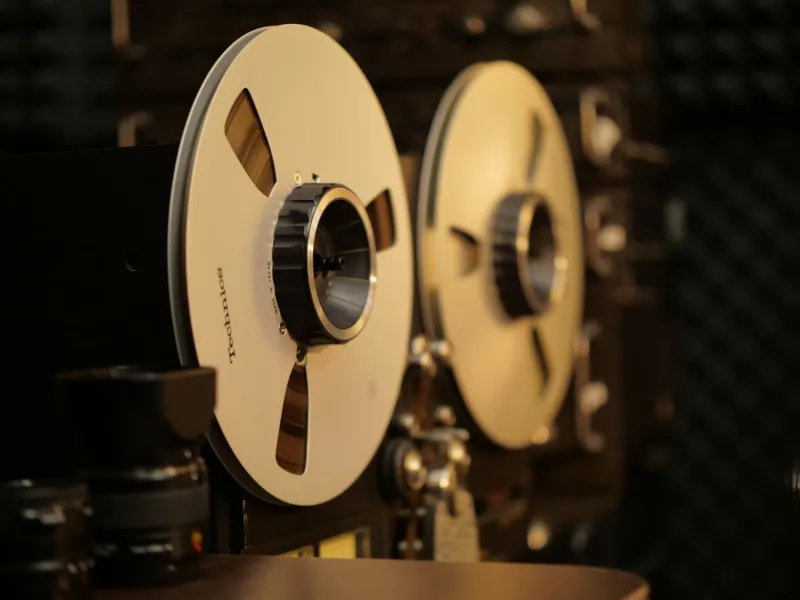
That means working quickly when the energy is right. It means not spending three days on a drum sound when the first sound you got was already the one. It means trusting tape hiss and room noise and the natural decay of an amplifier the way earlier generations of American musicians did — because those things aren't flaws, they're evidence that something real happened in that room.
The production choices they make are inseparable from the songs themselves. A slick, overproduced version of a Natural Child track would be a fundamentally different song — not just sonically, but emotionally. Strip away the warmth and the grain and the human imprecision, and you strip away the thing that makes it mean something.
Why This Approach Holds Up Over Time
Here's the thing about chasing trends in music: the shelf life is short. Whatever sounds cutting-edge in a given production moment tends to sound dated within a few years, because the whole point of a trend is that it passes. The bands that get remembered across decades are usually the ones who were too busy being themselves to worry about what was current.
Natural Child's catalog doesn't have an expiration date stamped on it because it was never trying to be timely. It was trying to be true. And truth — the real kind, the kind that shows up in a cracked vocal or an imperfect chord change or a lyric that sounds like it cost something to write — doesn't go stale.
That's the long game. Not chasing what's popular right now, but building something that someone can put on ten years from now and feel like it was written specifically for whatever they're going through in that moment. That's what the best American music has always done, from the front porches to the juke joints to the small stages where Natural Child still does their best work.
The Listener's End of the Deal
All of this only works if the listener shows up willing to meet the music halfway. And Natural Child fans tend to get that. The people who gravitate toward this band aren't usually looking for something that tells them exactly how to feel. They're looking for something that makes space for whatever they're already carrying.
That's the exchange. The band puts something real on the record — rough edges, honest lyrics, production choices that prioritize soul over sheen — and the listener brings their own experience to it. When those two things meet in the middle, that's when a song stops being a song and starts being something you keep coming back to.
Three minutes of honesty. That's the whole formula. Turns out it's enough.