Signed, Sealed, Authentic: How Natural Child Flipped the Script on What A&R Actually Looks For
The Room Where It Happens
Somewhere in a midtown Manhattan office building, a playlist is playing through a Bluetooth speaker that probably costs more than most musicians' gear rigs. On it: Natural Child. The person listening isn't a fan in the traditional sense — they're a senior A&R director at a major label, and they're using the band's catalog as a benchmark. Not for what to copy. For what to stop running away from.
That scene, or something close to it, has reportedly become more common over the past few years. And if you've been watching Natural Child's trajectory with any attention, it makes a weird kind of sense.
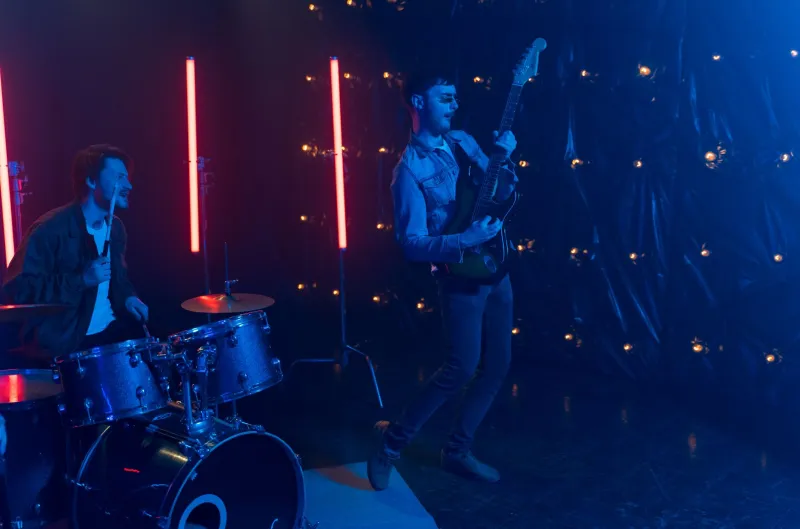
This is a band that built their following the old-fashioned way — relentlessly touring, recording on their own terms, and refusing to sand down the rough corners that make their music feel like something a real human being made on a real afternoon with real problems. They didn't court the algorithm. They didn't hire a brand consultant. And somehow, they ended up mattering in ways that a lot of slicker, better-funded acts never quite managed.
So what happened? And why is the industry suddenly paying attention?
When the Numbers Started Talking
For a long time, the conventional wisdom in label boardrooms went something like this: authenticity is a nice story, but polish is what sells. You find an act with a raw edge, you smooth it out, you market the result. Rinse, repeat.
Natural Child didn't cooperate with that model. They kept the tape hiss. They kept the looseness. They kept writing songs that sounded like they came from somewhere real — small towns, late nights, the specific American ache of wanting more than your circumstances seem to allow. And their audience kept growing anyway.
Streaming data doesn't lie. Neither do ticket sales. When a band consistently sells out rooms on the strength of word-of-mouth and a catalog that sounds nothing like what's trending, people in the business notice. The ROI conversation starts to shift. Suddenly "authentic" isn't just a descriptor — it's a data point.
Industry observers who track independent music markets have noted a measurable uptick in labels pursuing artists with what one consultant described as "demonstrable cultural credibility" — a fancy way of saying acts that feel real to their fans, not manufactured for them.
Natural Child sits squarely at the center of that conversation.
What A&R Directors Are Actually Saying
Speak with people inside the industry — even off the record — and a pattern emerges. The language has changed. Where A&R conversations once centered heavily on "market positioning" and "sonic branding," there's now more room for questions like: Does this artist have a genuine perspective? Is there a community already forming around them organically? Could this music survive without a push campaign?
Natural Child passes those tests in ways that can't be faked, and the industry knows it. Their fan base didn't emerge from a viral moment or a sync placement on a prestige TV show. It grew the way a fire grows — slowly, from a real spark, fed by people who found something in the music that they actually needed.
That kind of loyalty is extraordinarily hard to manufacture. And after years of watching manufactured acts flame out after a single album cycle, more than a few label executives have started treating it as the whole ballgame.
"The Natural Child model" — as some insiders have started calling it, only half-jokingly — is essentially this: make something genuinely yours, put it out honestly, tour like your life depends on it, and trust that the right people will find it. It sounds almost naively simple. It's also, apparently, extremely hard to replicate without meaning it.
The Ripple Into the Signing Process
Here's where things get interesting. The shift isn't just philosophical — it's showing up in actual decisions. Labels that spent the better part of a decade chasing TikTok-ready artists are quietly diversifying their rosters. They're signing acts with regional followings, acts with sonic identities that don't fit neatly into a single genre box, acts that look and sound like they've actually lived something.
Natural Child didn't cause that shift alone. But they've become a useful proof of concept — a band that did everything wrong by the old rulebook and ended up with something money genuinely can't buy: a fanbase that shows up.
For A&R departments trying to justify unconventional signings to their higher-ups, that example matters. You can point to Natural Child and say: here's what happens when you let an artist be exactly what they are. Here's the long game paying off.
Smaller labels and boutique imprints have been even quicker to absorb the lesson. The independent music space has seen a notable increase in deals structured around artist autonomy — fewer creative controls, more room for the artist's actual vision to breathe. That's not a coincidence.
Why This Matters Beyond the Business
It's worth stepping back from the industry mechanics for a second, because the bigger story here isn't really about boardrooms or balance sheets. It's about what it means when a band like Natural Child succeeds on their own terms.
For every young musician grinding through the early years, wondering whether they need to compromise their sound to get anywhere, Natural Child represents something genuinely encouraging. The answer, it turns out, might be no. Not always, not for everyone — but enough of the time that the question is worth taking seriously.
The band never positioned themselves as a movement or a message. They just kept making music that sounded like them, kept showing up at venues across the country, kept connecting with people one room at a time. The industry lesson was almost a byproduct.
But it landed. And it's changing things.
The Long View
Natural Child isn't done writing their story. New music, new dates, new rooms to fill — that's the ongoing work, and it's the work they've always cared about most. The industry conversation happening around them is, in some ways, beside the point from the band's perspective.
But for anyone watching American music and wondering which direction things are headed, the signal is worth reading. Authenticity isn't a trend. It doesn't go out of style because it was never really in style to begin with — it just either exists or it doesn't.
Natural Child has it. The labels are figuring that out. And the music keeps playing.