Slow Burn, Long Haul: Why Natural Child's Anti-Hype Playbook Is Paying Off
There's a version of the music industry that moves fast — really fast. One week you're nobody, the next you're on a trending playlist, and six months later you're a cautionary tale somebody references in a Reddit thread. That cycle has claimed more bands than bad reviews ever could. And then there's Natural Child, who seem almost allergic to that whole machine.
Their career arc doesn't look like a spike on a chart. It looks more like a slow-rising tide — steady, persistent, and harder to push back than anything that came in quick. That's not an accident. It's a philosophy, and it turns out that philosophy has some pretty serious economics behind it.
Rejecting the Shortcut Economy
Let's be honest about what the shortcut economy looks like for bands today. You pitch a sync deal to get a song in a car commercial. You chase a playlist curator with a massive following. You book one big festival slot before you've built the crowd to justify it, hoping the exposure does the work for you. Sometimes it does. More often, it creates a short-term bump with no foundation underneath it.
Natural Child never really played that game. Their releases have come out on their own terms, recorded the way they wanted, distributed through channels that made sense for who they actually are. There's no evidence of a marketing team reverse-engineering a sound to fit a streaming algorithm. What you hear is what they made, full stop.
That kind of stubbornness costs something up front. But here's the thing — it also builds a floor that doesn't collapse.
The Fan Retention Math Nobody Talks About
Here's a number the music industry doesn't love to advertise: the conversion rate between casual streamers and actual fans who show up, buy merch, and follow a band from city to city is genuinely tiny. Most listeners are just passing through. They heard a song, they liked it fine, they moved on.
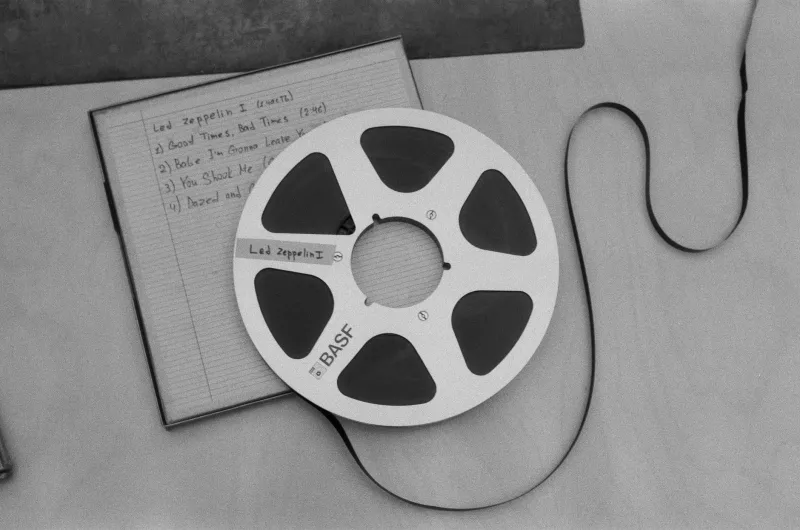
Natural Child's audience skews heavily toward the other end of that spectrum. These are people who own the records — sometimes on vinyl, sometimes on whatever format they could track down. They show up early to shows. They know the deep cuts. They're the kind of fans who will drive two hours to catch a set in a room that holds two hundred people.
That kind of loyalty doesn't come from a viral moment. It comes from years of consistent, honest output that gives people something real to hold onto. When a band never oversells itself, never promises more than it delivers, and keeps showing up the same way every time — that earns a different kind of trust than hype ever could.
And from a straight-up business perspective, a hundred fans like that are worth more than ten thousand passive streamers who'll never spend a dollar or drive a mile.
Touring as Infrastructure, Not Spectacle
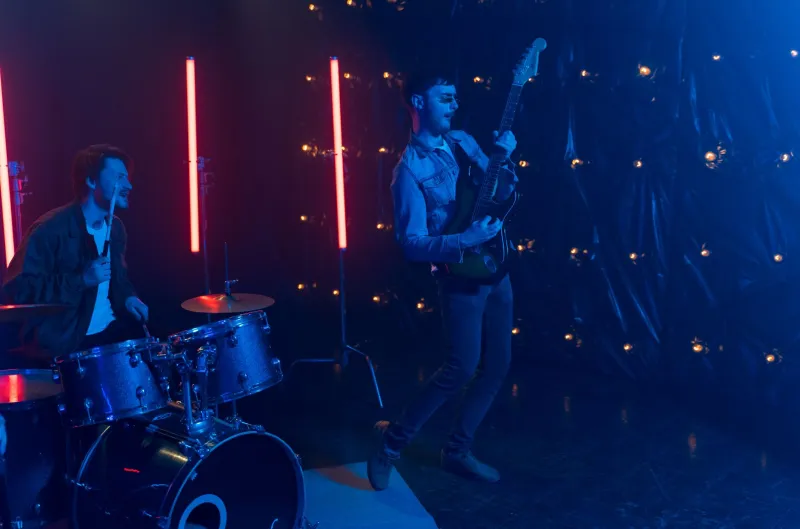
Natural Child tours the way a working band tours — not as a promotional exercise tied to an album cycle, but as the actual engine of the operation. The road isn't a marketing tool for them. It's the job.
That approach builds something that's hard to quantify but easy to feel. When a band comes through your town every year or two, plays the same kind of rooms, and treats every show like it matters, they become part of the local fabric. They're not a spectacle you drove to see once. They're a band you know. That relationship compounds over time in ways that a one-time festival appearance never can.
The economics of that model are also more resilient. A band that depends on a single massive tour to fund everything is one bad run of dates away from a crisis. A band that maintains a steady circuit of venues, markets, and loyal regional crowds has something more like a real business — one with recurring revenue and relationships that survive a slow year.
Craft as the Long Game
There's a reason the phrase "craft over hype" gets thrown around so much in conversations about Natural Child. The songs are built to last. They're not engineered for a specific cultural moment or designed to fit a trend that might be gone in eighteen months. They pull from a deep well of American roots music — rock and roll, country, blues, soul — and they do it in a way that sounds timeless rather than retro.
That matters for sustainability in a way that's easy to overlook. A song that sounds like it belongs to a specific year has a shelf life. A song that sounds like it could've been made anytime in the last fifty years keeps finding new ears. Natural Child's catalog has that quality. Somebody discovering them today isn't walking into a museum — they're walking into something that still feels alive.
That's not easy to manufacture. It comes from caring more about the song than the moment, more about the performance than the production value, more about what the music actually says than how it's packaged.
What Other Bands Can Actually Learn From This
The Natural Child model isn't going to work for everyone, and it's not really meant to be a blueprint you can copy wholesale. But there are a few things any band can take from it.
First: build your floor before you worry about your ceiling. A small, genuinely devoted audience is more valuable than a large indifferent one, and you build the former through consistency and honesty, not through chasing numbers.
Second: the road is still the best place to make real fans. Streaming is fine for discovery, but the relationship that gets sealed at a live show — in a sweaty room where the band is ten feet away and clearly giving everything they've got — is a different thing entirely.
Third: don't let the short-term metrics make your decisions. Playlist placement is nice. A trending moment is nice. But neither of those things tells you whether you're building something that can sustain a career over years and decades.
Natural Child has been at this long enough to prove that the slow burn actually works. The band is still out there, still recording, still touring, still adding to a catalog that holds up. That's not luck, and it's not a fluke. It's what happens when a band decides that the work itself is the point — and sticks to that decision even when the shortcuts are right there.
In an industry that keeps rewarding the sprint, they're running a different kind of race. And they're still running it.