Turning the Dial Back: How Natural Child Is Making Radio Programmers Rethink Everything
There's a certain kind of meeting that happens every week in music industry offices from Nashville to Los Angeles. Someone pulls up metrics, someone else talks about what's trending, and a playlist or a rotation slot gets built around whatever the data says people want. It's been the same conversation for decades, give or take a streaming dashboard.
So when a band like Natural Child starts showing up in those conversations — not because they chased the formula, but because they flat-out ignored it — it's worth paying attention to why.
The Numbers That Weren't Supposed to Work
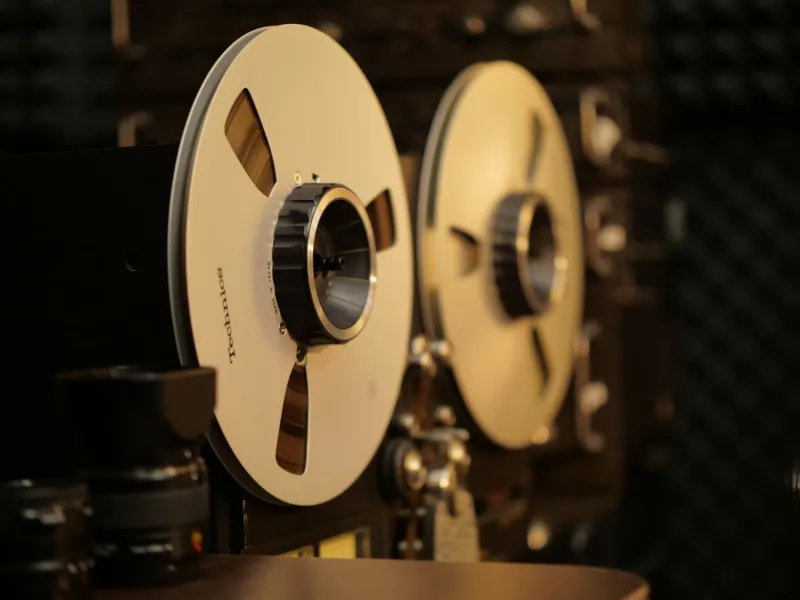
Natural Child has never been a band that fits neatly into a format. Their sound pulls from classic rock, country soul, and swampy Americana in ways that don't map cleanly onto any single radio category. There's no obvious morning-drive single in their catalog. No hook engineered to hit a specific BPM target. What they've got instead is a body of work that sounds like it was recorded by people who genuinely love music — tape hiss, live room bleed, and all.
For years, that was supposed to be a liability. Then something started shifting.
Independent radio programmers in markets like Austin, Americana-leaning college stations across the South, and a handful of Triple A outlets in cities like Denver and Minneapolis began noticing something they hadn't expected: Natural Child songs were holding listener attention in ways that polished, algorithm-tested tracks often didn't. People weren't changing the station. They were turning it up.
That's a data point that's hard to argue with, no matter what the format guidelines say.
When the Gatekeepers Start Asking Questions
A few things happen when a band that shouldn't work by conventional metrics actually does. First, programmers start talking to each other. Then bookers start paying attention. Then the conversation quietly shifts from "why is this working" to "what does this mean for what we've been doing?"
Several venue bookers in mid-size markets — the 500-to-1,500-capacity rooms that serve as the backbone of American touring — have started openly reconsidering their booking philosophy after watching Natural Child consistently sell out floors and generate the kind of word-of-mouth that no amount of sponsored posts can manufacture. One booker at a well-regarded club in the Southeast reportedly told a booking agent that seeing a Natural Child crowd convinced them to start prioritizing "real over radio-ready" when filling their calendar.
That's a small data point. But it's not an isolated one.
On the streaming side, curators at a handful of independent playlist operations — the kind that don't answer to a major label's marketing department — have been quietly slotting Natural Child tracks into playlists previously dominated by more produced, trend-adjacent artists. The reasoning, when they've talked about it publicly, keeps coming back to the same idea: listeners are getting better at detecting inauthenticity, and they're voting with their skip buttons.
What "Commercial" Actually Means in 2024
Here's the uncomfortable truth that Natural Child's trajectory is forcing some people in the industry to sit with: the definition of "commercial" has always been a moving target, and right now it might be moving toward them.
For most of the past decade, commercial viability in music meant a certain kind of production clarity, a certain tempo range, a certain emotional palette that was big enough to feel universal but not so specific that it alienated anyone. It meant sanding off the idiosyncratic stuff. It meant making music that could live in a grocery store without anyone flinching.
Natural Child makes music that would absolutely make someone flinch in a grocery store — in the best way. It's specific. It's got personality. It sounds like it came from somewhere real and landed somewhere real. And increasingly, that specificity is what's connecting with listeners who've grown up on an ocean of content so smooth and frictionless that it slides right out of memory.
When a song actually grabs you — when it sounds like a person made it rather than a committee approved it — that's starting to register as a competitive advantage rather than a commercial obstacle.
The Ripple Moves Outward
What makes the Natural Child effect interesting isn't just what's happening to them. It's what's happening around them.
Younger bands watching their trajectory are drawing conclusions. If you can build a genuine following, move real tickets, and earn the kind of listener loyalty that doesn't evaporate between release cycles — all without compromising the thing that makes your music yours — then maybe the conventional wisdom about what you have to do to succeed deserves another look.
Some of those younger artists are explicitly citing Natural Child as proof of concept when they push back against label pressure to clean up their sound or chase a more marketable aesthetic. That's a cultural conversation that starts small and tends to compound over time.
Meanwhile, a few radio programmers who've started incorporating more raw, less-produced Americana into their rotations have reported listener responses that surprised them. Engagement up. Complaints minimal. The audience, it turns out, was ready for it. The gatekeepers just hadn't opened the gate.
None of This Was Calculated
It's worth being clear about something: Natural Child didn't set out to disrupt the radio industry or reshape playlist culture. They set out to make music that felt honest and play shows that felt alive. The fact that this approach is generating ripple effects in boardrooms and programming meetings is a byproduct, not a strategy.
That might actually be the most important part of the story. The bands that change things rarely do it by trying to change things. They do it by refusing to compromise on what matters to them and then being consistent enough and good enough that the world eventually has to reckon with them.
Natural Child has been doing that for years. In 2024, it looks like the reckoning is underway.
Whether the industry absorbs the lesson or goes back to chasing the next data-driven trend once the moment passes is another question entirely. But for now, somewhere in a programming office or a booking agency, someone is pulling up a Natural Child track and asking a question they maybe haven't asked in a while: what if we just played the good stuff?
That question is worth more than any algorithm.